 MADE TO
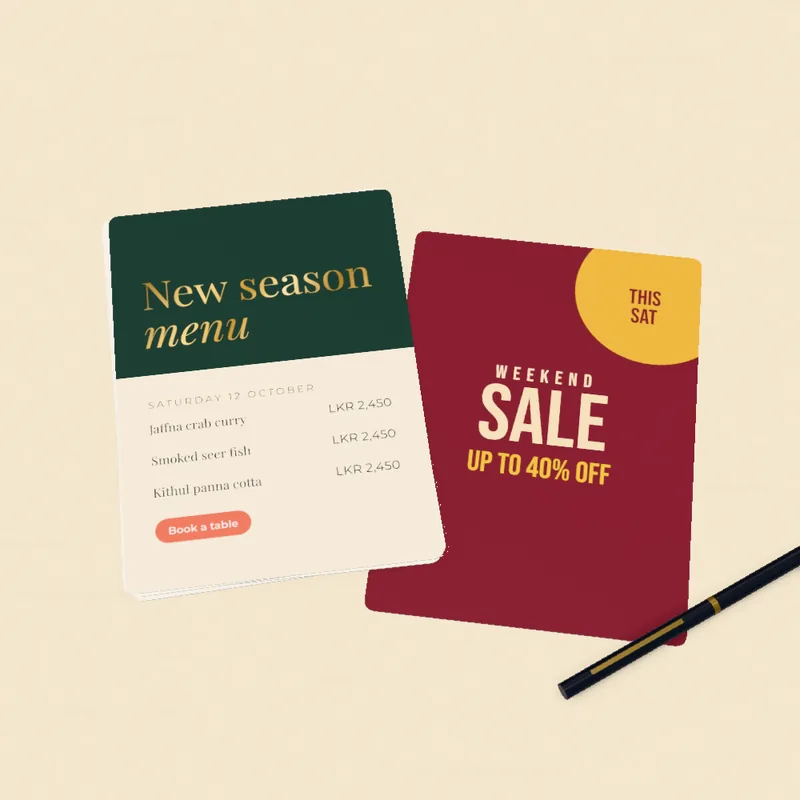
Short answer: for a table menu, use a thick card (300 gsm or more) with a protective finish, keep the design to one or two pages, and print short runs often instead of a big run, because prices and dishes change.
Pick a size
- A4 fits a full menu and is easy to read, but is large on a small table.
- A5 suits cafes and short menus.
- DL (long, narrow) works for drinks lists and table cards.
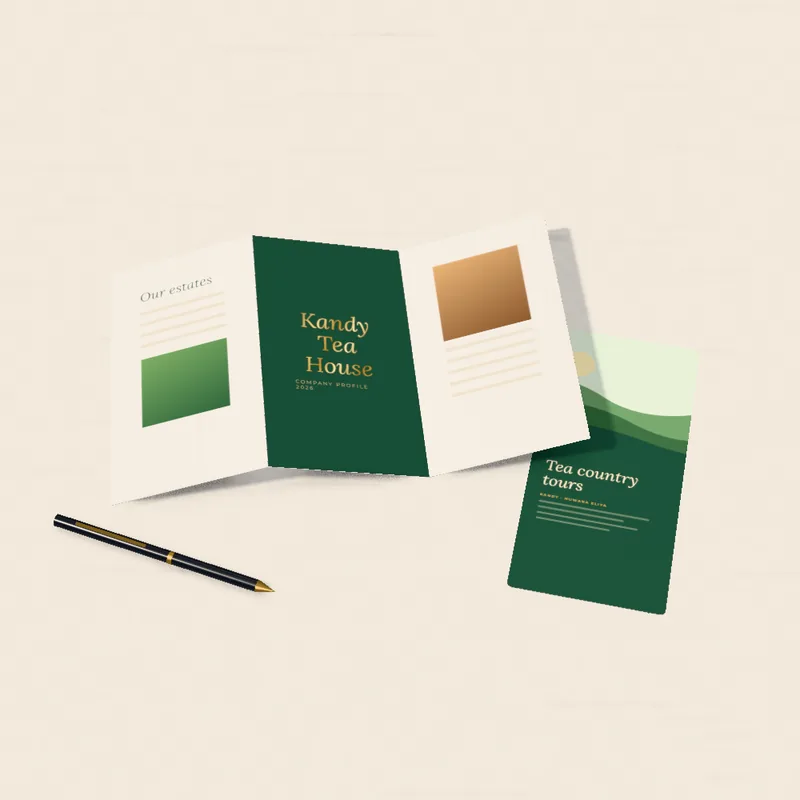
- Folded menus give you more space while staying handy.
Paper and finish
Menus get touched, spilled on and wiped. Thick card with a matt or gloss lamination wipes clean and lasts longer. Uncoated paper looks natural but marks easily, so it suits menus you reprint often.
Make reprints easy
- Keep prices in a clearly separate area so only that part changes.
- Print a smaller quantity more often rather than storing old menus.
- Keep one master file with the date in its name.
Sinhala and Tamil menus
If your menu uses Sinhala or Tamil text, send a PDF with fonts embedded. A Word file can change the letters on another computer.
Send a clean file
Use our artwork guide for bleed and safe zones: size plus 3 mm bleed, text 4 mm inside the trim, CMYK, images at 300 dpi. We check every file for free and tell you before printing if something needs fixing.