 MADE TO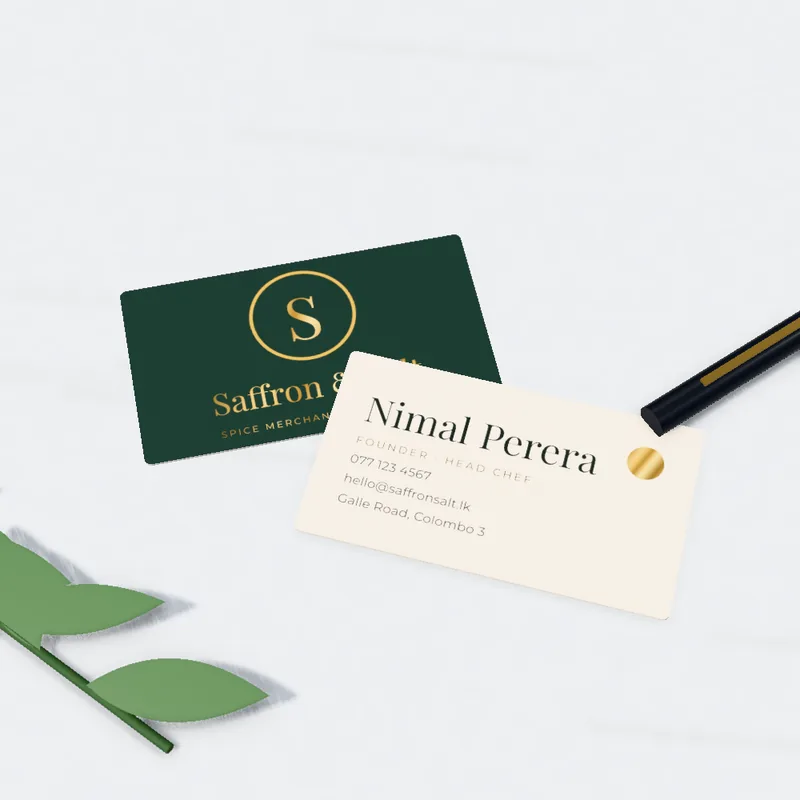
Short answer: gsm means grams per square metre. A higher number means thicker, stiffer paper. Office paper is about 80 gsm, a flyer is usually 130 to 170 gsm, and a business card is usually 300 gsm or more.
What each weight is good for
| Weight | Feels like | Good for |
|---|---|---|
| 80 to 100 gsm | Office paper | Letterheads, forms, inserts |
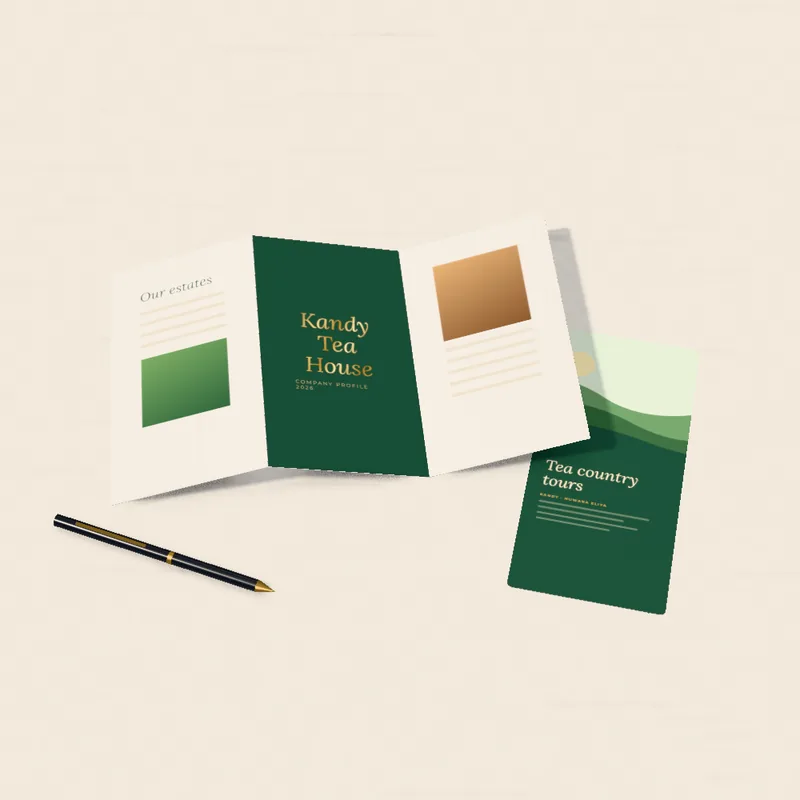
| 130 to 170 gsm | Light, flexible | Flyers, leaflets, brochure pages |
| 200 to 250 gsm | Firm, still bends | Covers, posters, rack cards |
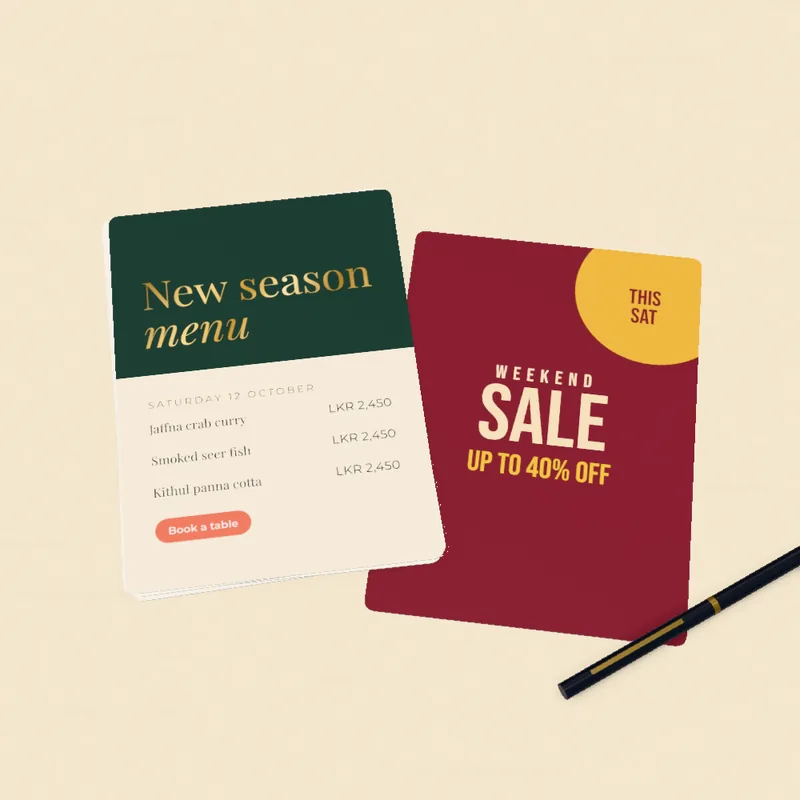
| 300 to 350 gsm | Stiff card | Business cards, postcards, menus |
| 400 gsm and above | Very thick | Premium cards, soft-touch finishes |
Gsm is not the whole story
Two papers with the same gsm can feel different. Coated paper (gloss or matt) has a smooth surface and gives strong colour. Uncoated paper is more natural, takes a pen well and shows colour a little softer. Always check the finish as well as the weight.
How to choose
- Will it be handled a lot? Cards and menus need 300 gsm or more so they do not bend.
- Do you need to write on it? Choose uncoated or matt, not gloss.
- Is it mailed or handed out in bulk? Lighter paper costs less and weighs less.
- Do you want a premium feel? Go thicker and add a finish such as soft-touch.
Feel it before you choose
Stock names and weights are confirmed on each product page. If you are unsure, send us your use on WhatsApp and we will suggest a stock, or ask for a sample before a large run.